Tuesday, September 18, 2012

Chief Inspector Zara Investigates: The Suspect Garden

 It was a dark and mild night. Chief Inspector Miss Zara of the Garden Crime Unit had a hunch.
Or was it lunch? No, it was evening, and lunch had long passed. If anything, it was a kind of late-night snack, or sleuthing. There was Something out there down in the shrubbery thing you've sort of designed, Constable "Artist" Faisal, or so you so style yourself...
Hmm. Smells good. Or smells of old socks. Constable Faisal, PLEASE stand back! Your interference could mangle our investigation!
Some sheets, stuck across the shrubbery, some Pittosporum, some Euphorbia, a moon, up in the sky, some rather poor design statements...Chief Inspector Zara, which way did the wind blow, who's the culprit, where's the (uneaten) evidence?
In one of the many forgotten footnotes of Australasian gardening crime, the irrepressible Chief Inspector Zara reported the location of a clue east of the laundry and downwind of the hose, buried half-forgotten in the lush, emerald-ish grass...
her assistant, brow-beaten, exhausted, worn-out by kitchen-duties, lacking canine insight, lagging behind with rather out-of-date photographic equipment, stared out into the chicken-wire fence...
and had to agree, many times, that, yes, there WAS something out there, at 11 pm, when everyone else was asleep, though whether it was a sock blown off the clothesline, a bone of contention or a false alarm, he couldn't tell...


Tuesday, September 11, 2012

This Thurso Thrill

You'll probably remember, appreciated reader, my recent post about an 1867 biography of Robert Dick, a Victorian, Scottish, self-made botanist, I'd bought. I've been following the blog of Joanne B. Kaar an artist whose hands-on, dedicated work with natural materials refers specifically to his achievements. It appeals greatly to me.
It just so happens that I sent the book to Joanne in Thurso, way up in far north-east Scotland ( having asked her first if she'd like it! ), feeling that among all the people in the world, she was most the one who should own it.
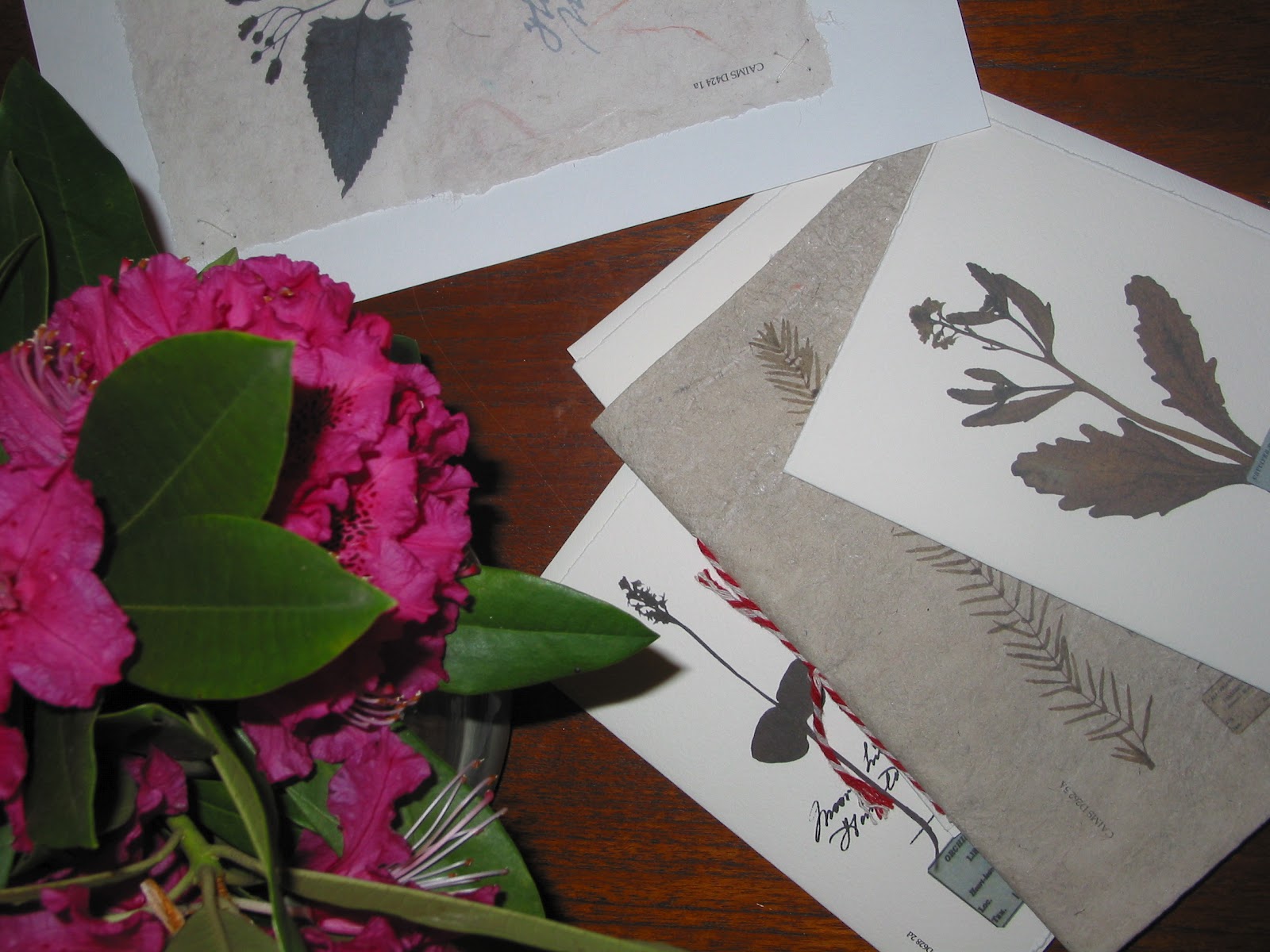
It thrills me to make connections across the world. I didn't expect anything back from Joanne. Imagine my delight, then, when this arrived, this parcel of prints and cards, made by Joanne, way up there, as far from Melbourne as you can get.
All of life, to me, is based on natural forms and forces, and the better-connected we are to these, the healthier we are. I admire any artist who with discipline and restraint reminds us of the beauty of our existence.
Thankyou, Joanne. I've been blown away to be in receipt of such a gift. My blogging followers believe I have an ability to create, but all I can do, in reality, is re-arrange.
It is you who is the maker ( forgive me for the washed-out photo ), and me who reports.
 I'm hoping that many of you will take a look at Joanne's blog - and I hoped I've linked it correctly, being hopeless at techno stuff like this - for it takes all of your life - as it did for Robert Dick  - to dedicate yourself to art.
See joannebkaarbakersbotanistswhalers.blogspot.com

Saturday, September 1, 2012

A Golden Age

Whisked away to Ballarat for a week with my car-apprehensive accomplice Zara, I was having a working holiday...in one of the coldest parts of the State, at the end of winter...
We had two visits to the Ballarat Botanical Gardens. Above is the only unfinished sculpture I came across in this public space crammed with statuary, and my favourite.
Ballarat was a famous 'boomtown', being at the heart of one of the world's biggest goldfields, when gold was first discovered here, in the 1850s. Above is a view of Loreto College, on the shores of Lake Wendouree. Today, most of the gold you see belongs to the daffodils, everywhere in Ballarat...
Not that I had an endless, sunny horizon. When it wasn't drizzling, Brave Faisal and Superzara got stuck into masses of ivy...with a pair of clippers, I mean:
All of this came from out from under the kitchen window. How many hours did it take us, Zara?
 Ivy I prefer when it's only taken over half the universe, as here...
but lichen, Zara and I agreed, is subtle, so to see it everywhere reminds us of golden ages...
such as this signpost signals.
The Ballarat Botanical Gardens "are one of Victoria's most significant regional botanic gardens, retaining a gardenesque style characterised by mature trees, bedding plants, statuary and contemporary architecture". I have never seen so many statues in one place in my life, though if I were fleeing from Pompeii, as the above threesome are said to be doing, I'd be glad to be somewhere a little cooler now too.
The above gives you some idea of the scale and layout. It is one of the most formal gardens I've visited, a linear promenade punctuated by massive, conifers such as Araucaria and Sequoia ( especially Sequoiadendron giganteum, Sierra redwood ). It made me reflect on the quality of our public spaces, and how they express our civility and the way we regard one another. It is also, here, triumphant, an example of how the extraordinary wonders of the world can be harnessed by an evolving and ambitious humanity.

The prehistoric, elephantine garrison of a tree, the Bunya Bunya ( Araucaria bidwillii ) is splendid.
I imagine the Victorians saw human endeavour as encompassing and mastering such splendour, yet I feel they were the first to behold the magnificent extent of the world around them. They were as thrilled as I was,
by all this new life.
As the name 'Ballarat', coming from the language of the Wathaurong Aboriginal people, means "resting place", so these gardens offer respite... 
...to a black swan and her cygnets too.
The site is also one of commemoration. Above is a part of the more recently-built war memorial, on the perimeter.
 And here, the commemoration of rhythm and echo and flow and continuity, in the guise of a fountain. These are the most finely-maintained gardens I've entered, its lawns the lushest.
 Nothing is slapdash.
Past and present merge flawlessly. Is not a Golden Age more than a memory, but an aspect of our nature that can come alive wherever we perambulate?
Here, above, a corner of the Robert Clark Horticultural Centre. The new can meld with the old without jarring,
just as the old can appear from up out of the new without discord.
Whenever the rain kept me indoors, I read Gavin Maxwell's 'The Rocks Remain', and I was reading this because as a boy I'd been a huge fan of his famous 'Ring of Bright Water', an account of rearing otters in remote Scotland. I remembered other stories that are with me still: Hugh Lofting's, Gerald Durrell's, Paul Gallico's, Virginia McKenna's.
So a Golden Age, to me, is one that is forever renewed, and it is in the garden, in working with nature and what is natural, that my acquaintance with it comes most alive. Go, daffodil, go!


Saturday, August 11, 2012

Hope Only Appears to Slumber

What IS a poor boy to do? He runs around in the garden, he feeds the birds, he reads, he loosens the knots, he listens.
And he buys books, like this, John Baker's 'Cottage by the Springs', Phoenix House, London, 1961.
A London bookseller and publisher, of far greater attainment than I, John Baker found his escape in Wiltshire, renovating a ruined cottage, and building around it a garden in wet ground.
I am listening to Townes van Zandt, the Texan country/folk music singer, born the same day as my mother...
...and I am collecting flowers, whether they may be from out of another time, or from here, where the winter is giving us spring already.
A certain doggy, of course, needs to recline after a cold day's exertion. "Zara," Faisal said, "tuck your paws under some Texan sound, and dream of springs springing up, and some flighty birds needing to be chased."
John Baker is here "recalling a country experience in which, under the wide arc of the sky, the time and the place and the man combined to create an idyll which may find an echo in many a townsman's heart." THIS townsman, and his doggy, with hearts we hope will keep expanding, hear a song of  hope for all of the world, that for all of its residents, protection and renewal will be given.

Saturday, August 4, 2012

Scotland the Brave

If it wasn't for the artist Joanne B. Kaar, I wouldn't have heard of Robert Dick. Please look at her wonderful blog,
joannebkaarbakersbotanistswhalers.blogspot.com or her web page, www.joannebkaar.com
Only through her did I find out about an extraordinary 19th Century Scottish botanist. ( Forgive me, Joanne, I don't know how to link. )
With his mother dying during his boyhood, and his father remarrying an apparently cold-hearted second wife, the young Robert Dick was apprenticed to a baker, and was obliged to forsake a sense of home.

In Caithness, in the northern reaches of Scotland, this may have been ordinary fare. But not for Robert Dick, with his enquiring mind and an aptitude for perseverance. He not only established a successful bakery, but he worked unstintingly to explore and understand all the vastness around him.
I was thrilled to find this biography appear. 'Robert Dick, Baker of Thurso, Geologist and Botanist', by Samuel Smiles, published by John Murray, Albemarle Street, London, 1878, is one of those books that take you back, way back when.
Despite my apparently Scottish surname and my father's unceasing playing of Scottish music, my own paternal line made its first recorded appearance on the Isle of Wight, back in about 1550, where it still continues. Our name was then styled 'Graunt(e)', and probably came from French settlers.
My own history is irrelevant, except that my love of plants has an affinity with Robert Dick's. This is Morven Mountain, where the young Robert walked, unceasingly, day and night, it would seem. He collected not only plant specimens, but insects, shells, stones, anything intriguing.
It's been a passion of mine to go to Scotland, a land of wandering, a land for wanderers. This is 'The Deil's Brig: Holborn Head'. I can't pretend to know what it was like for the young apprenticed baker to make his way out into the world around him, without precedent, suspected of madness by  the locals.
Entirely self-taught, self-trained and self-disciplined, "the Thurso people did not quite understand the proceedings of their young baker. He made good bread, and his biscuits were the best in the town. But he was sometimes seen coming back from the country bespattered with mud, - perhaps after a forty or fifty miles' journey on the moors in search of specimens. What were they to make of this extraordinary conduct? It could have no connection with baking. What could he have been doing during these long journeys?'
Above, 'Rocks at Holborn Head: Slaters Monument'.
Known, now, for his endurance, resilience, and commitment, his work, consisting of unending collecting and observation, led him to The Royal Geological Society. He would walk for miles and miles, across the moors, often at night...
We think we have it tough today, but Robert Dick struggled against great odds, not to be famous, but to impart his knowledge.
From page 78: On another afternoon in July he goes to the Dorery hills. "I had a ramble," he said, "on Saturday last, after my day's work was over.While on my way I found in a quarry, at a loch, a fossil fish snout or two, and some plants, I got to the hills, about ten miles off, and examined ferns and roses. I had a grand view of the Sutherland hills. I stood in a sheltered nook, and gazed at the sunlight shining far over the distant mountains. I never forget any of these moments. I turned aside this morning just to gaze upon the moon. It was about two o'clock in the morning. All was still, solemn and impressive."
And so, I am still reading about this lone explorer who shunned any limelight, who kept moving, and striving, despite being alone. Though I couldn't be as valiant or single-minded as Robert Dick, I too grow through exploration of all that is around me.